
Website Blog: Pop the Pig as a Social-Emotional Learning Game
Play is one of the most natural ways for young children to learn. A simple game can create opportunities to practice communication, cooperation, emotional regulation, and problem-solving—all while keeping children engaged and having fun.
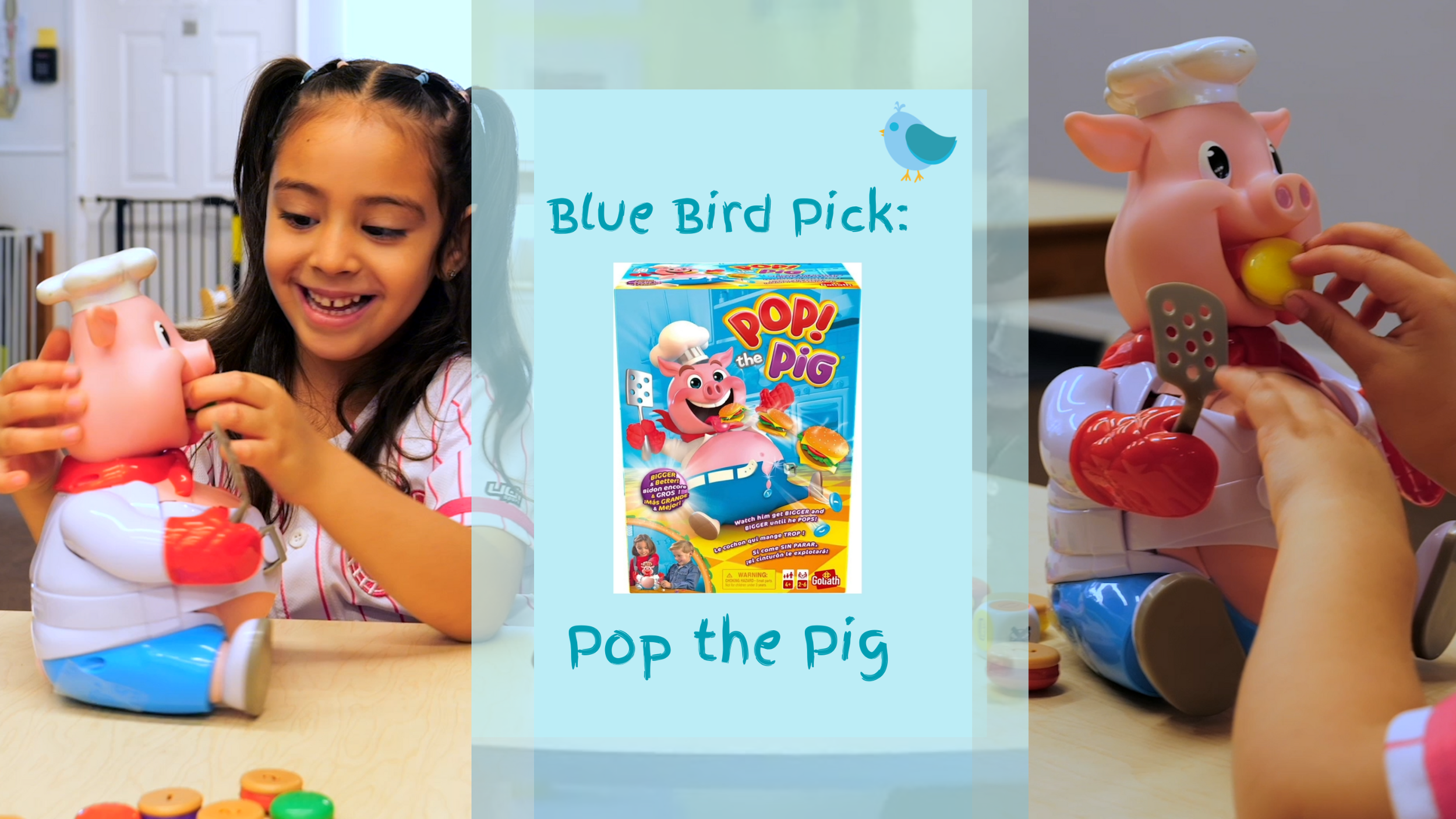
At Blue Bird Social Skills, we regularly use games and activities to help children practice social-emotional learning (SEL) skills in an environment that feels natural and enjoyable. One game we especially love is Pop the Pig.
While children may see Pop the Pig as a silly game about feeding a hungry pig until his belly pops, there are actually many opportunities to practice important social skills hidden within the game.
Learning to Take Turns
One of the most fundamental skills children practice during Pop the Pig is turn-taking.
Players have to wait while someone else rolls the die, chooses a hamburger, feeds the pig, and takes their turn. For young children, waiting can be surprisingly challenging. They may feel excited, impatient, or eager to see what happens next.
These moments give children an opportunity to practice patience and impulse control.
With adult support, a child can learn that waiting doesn't mean they're being left out. Their turn is coming, and they can stay engaged while another person plays.
Turn-taking is a foundational social skill that extends far beyond games. Children use it when talking with friends, participating in classroom activities, sharing materials, and engaging in cooperative play.
Practicing Impulse Control
Pop the Pig also provides opportunities to practice impulse control.
Children may be excited to press the pig's belly or eager to see whether it will pop. Learning to wait for the appropriate moment requires children to pause and follow the rules of the game rather than immediately acting on their excitement.
These small moments are valuable practice for developing self-regulation.
At Blue Bird Social Skills, we know that young children aren't expected to have perfect impulse control. These are skills that develop gradually through practice and supportive guidance.
Building Frustration Tolerance
Perhaps one of the biggest SEL opportunities in Pop the Pig comes from its unpredictability.
Children don't know exactly when Pop will pop. They may hope that it happens on their turn—or they may be disappointed when another player gets the exciting moment.
Games naturally create these moments of uncertainty and disappointment, making them a useful way to practice frustration tolerance.
An adult can help a child recognize and name what they're feeling without immediately trying to make the feeling disappear.
"You really wanted Pop to pop on your turn."
"It's disappointing when something doesn't happen the way you hoped."
These simple statements help children connect emotions with experiences and begin developing strategies for handling disappointment.
Learning How to Handle Winning and Losing
Games also give children opportunities to practice sportsmanship.
Winning can feel exciting, while losing can feel disappointing. Both experiences require social-emotional skills.
Children can practice congratulating another player, celebrating appropriately, accepting an outcome they don't like, and continuing to participate even when they don't win.
These experiences can help children understand that losing a game isn't the same thing as failing. It is simply one outcome of playing.
Over time, repeated experiences with manageable disappointment can help children develop greater flexibility and resilience.