
How Breathing Exercises Help Children Build Emotional Regulation and Social-Emotional Skills
At Blue Bird Social Skills, one of the first skills we introduce to young children is often one of the simplest: breathing.
While it may seem surprising that something as natural as breathing can have such a significant impact on a child’s social-emotional development, breathing exercises are one of the most effective tools for helping children build emotional regulation, self-awareness, and resilience. In fact, many of the emotional and social skills children need to navigate everyday challenges become easier to access when they first learn how to regulate their bodies.
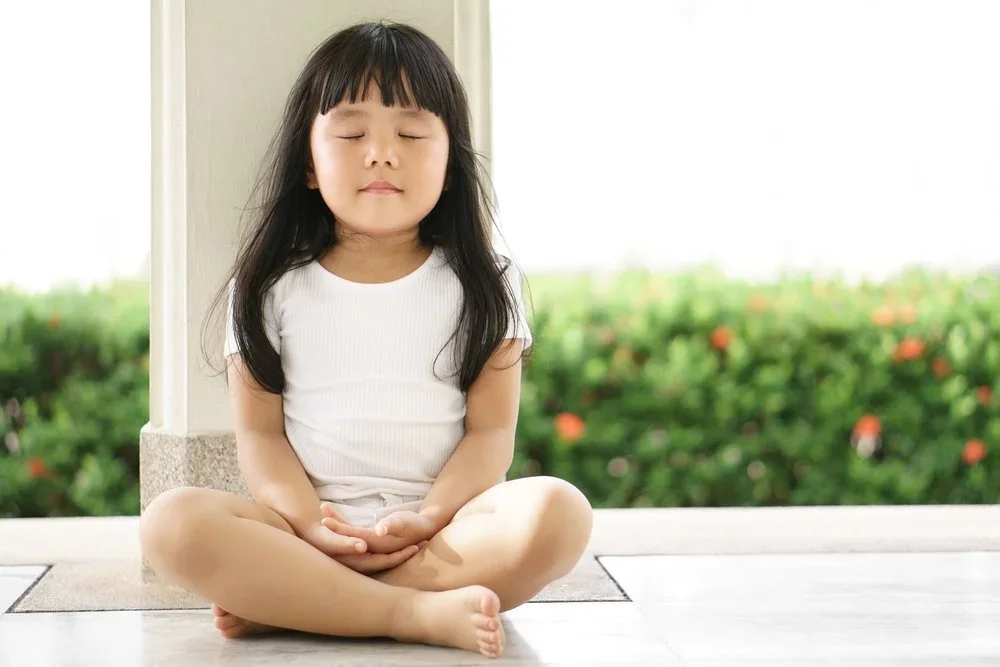
Young children experience big emotions. A disappointment that may seem minor to an adult can feel overwhelming to a child. A transition between activities can trigger frustration, excitement can become overstimulation, and conflicts with peers can quickly escalate into tears or emotional outbursts. These reactions are not signs of failure—they are a normal part of development.
The challenge is that when children become emotionally overwhelmed, it becomes difficult for them to think clearly, solve problems, communicate effectively, or access the social skills they may already know. This is where breathing exercises can help.
Intentional breathing activates the parasympathetic nervous system, sometimes referred to as the body's "rest and regulate" system. Slow, controlled breathing sends signals to the brain that it is safe to relax, helping reduce stress responses and create a sense of calm. For children, this means that breathing exercises can help lower emotional intensity and create space for more thoughtful responses.
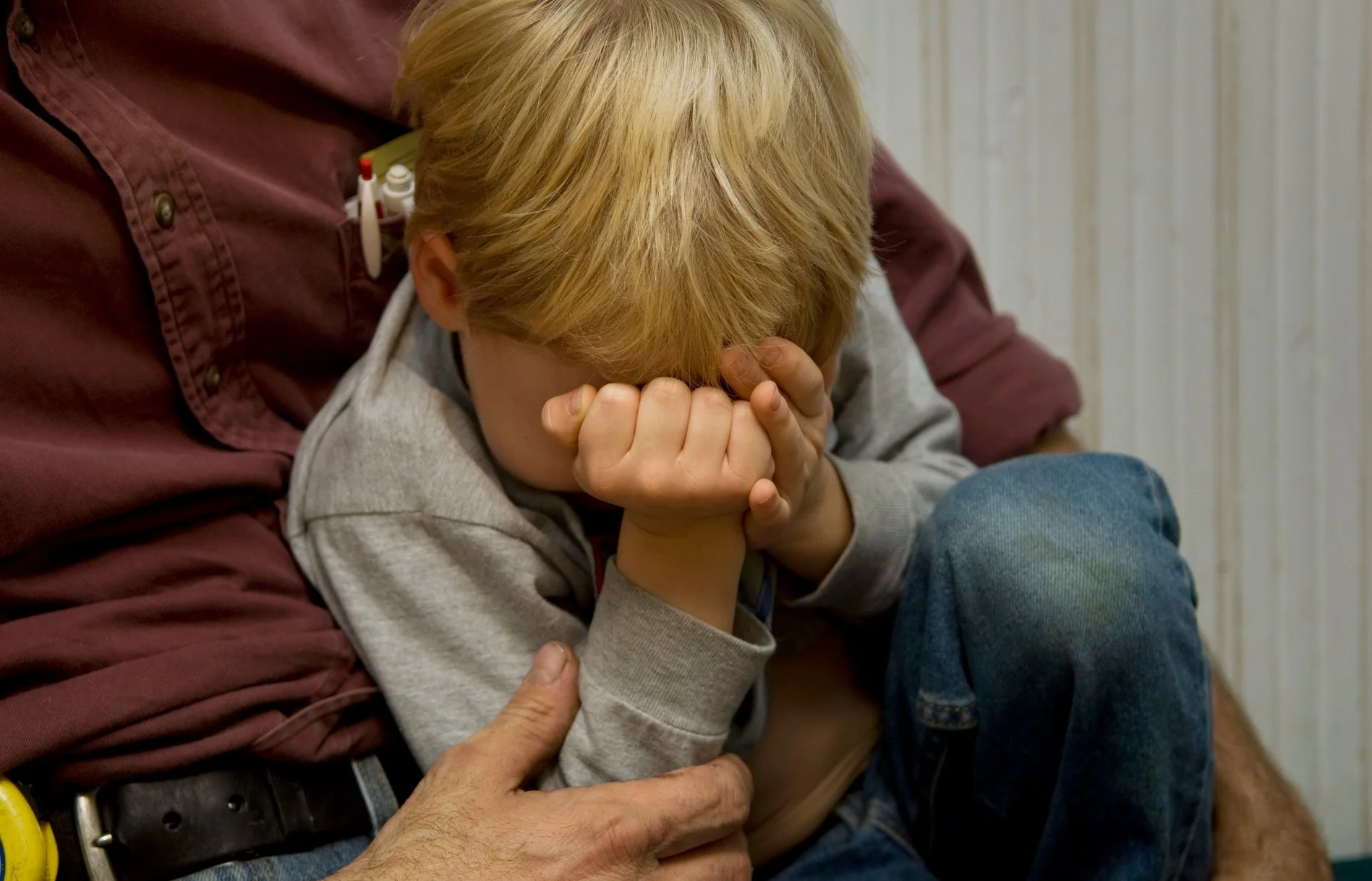
At Blue Bird Social Skills, we teach breathing not as a reaction to difficult behavior, but as a proactive skill. Just as children practice letters or numbers repeatedly before mastering them, emotional regulation skills need practice too. When children engage in breathing exercises during calm moments, they become more likely to access those tools when emotions begin to rise.
Breathing exercises also help children develop body awareness. Many young children have difficulty recognizing the physical sensations that accompany emotions. They may not notice their muscles tensing when frustrated or their heart racing when anxious. Breathing activities encourage children to slow down and pay attention to what is happening inside their bodies, which is a foundational step toward emotional regulation.
Beyond emotional regulation, breathing exercises can support social-emotional learning in several ways. Children who are better able to regulate their emotions often have an easier time taking turns, cooperating with peers, handling disappointment, solving conflicts, and communicating their needs. In other words, breathing can help create the emotional foundation that supports successful social interactions.
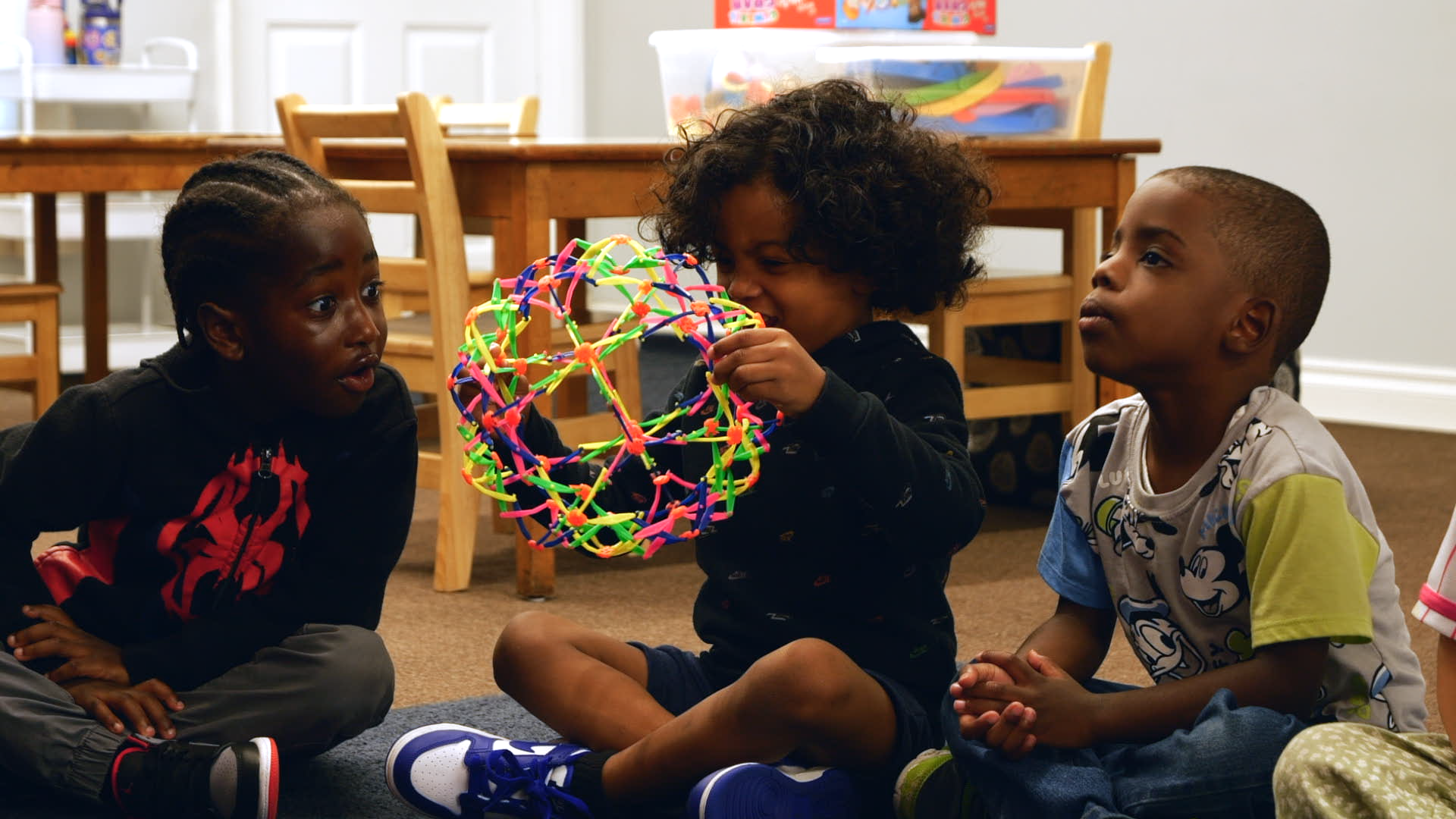
One of our favorite tools for teaching breathing exercises is a breathing ball, sometimes called a Hoberman Sphere. The expanding and contracting movement of the ball provides a visual representation of inhaling and exhaling, making an abstract concept much easier for young children to understand. As the ball expands, children breathe in. As it contracts, they breathe out. This simple visual cue often increases engagement and helps children maintain a slower, more regulated breathing pattern.
This breathing-based approach is featured throughout our Blue Bird Social Skills for Young Children course, where we teach parents, educators, and caregivers practical strategies for helping children develop emotional regulation through playful, evidence-based activities. Rhythmic breathing is one of the foundational tools included in the course because it can be used virtually anywhere—at home, in the classroom, during transitions, or before challenging situations.
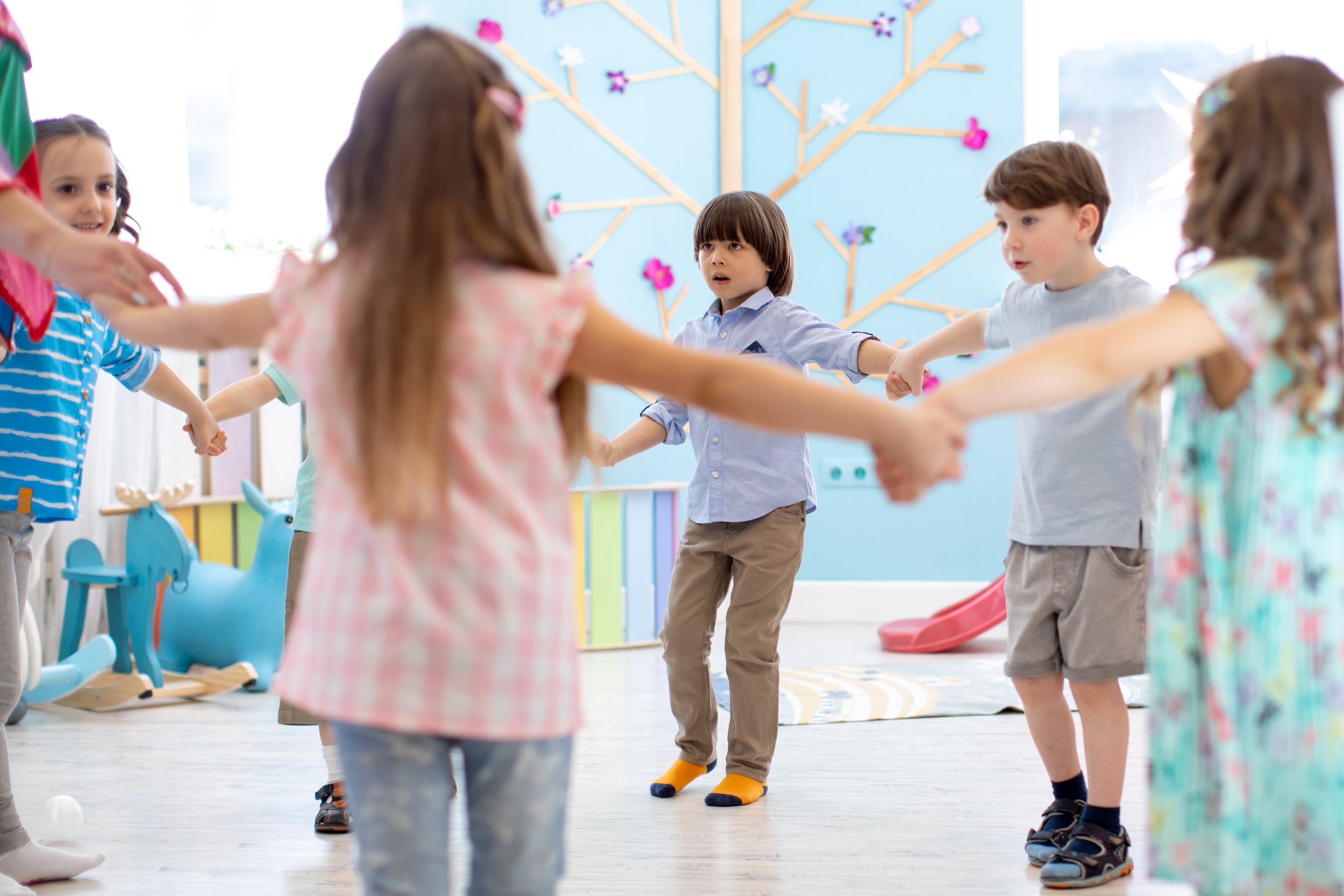
The goal is not to eliminate emotions. Emotions are important signals that help us understand ourselves and our experiences. Rather, breathing exercises help children learn that emotions are manageable. They provide a tool children can carry with them as they learn to navigate friendships, frustrations, challenges, and everyday life.
At Blue Bird Social Skills, we believe emotional regulation begins with awareness, practice, and support. Sometimes, one of the most powerful places to start is simply taking a breath.